

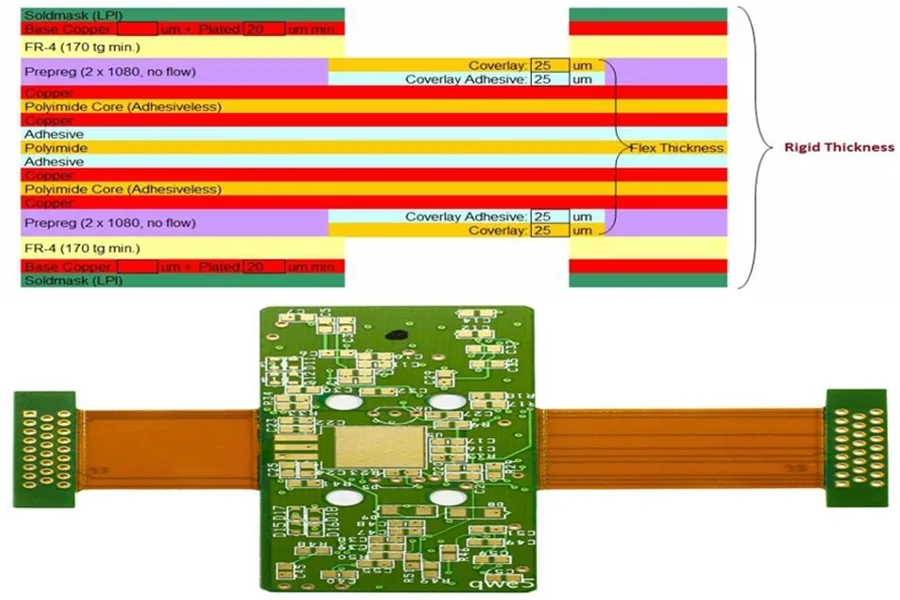
The rigid circuit board is one of the most essential components in the electronics industry. Known for its durability, stability, and precise performance, this type of circuit board is widely used in devices that require reliable connections and long-lasting functionality. Unlike flexible or rigid-flex designs, the rigid circuit board is made from solid substrates that do not bend, ensuring that it maintains its shape even under mechanical stress. This stability makes it the preferred choice for applications ranging from consumer electronics to industrial and automotive systems.
What is a Rigid Circuit Board?
A rigid circuit board is a printed circuit board (PCB) that uses a stiff substrate, typically fiberglass-reinforced epoxy resin, to provide structural integrity. The most common material is FR4, though other high-performance laminates may be used depending on the application. These boards consist of multiple layers, including copper traces that conduct signals, a substrate for support, a solder mask to prevent short circuits, and a silkscreen layer for labeling components. Because they are not flexible, rigid circuit boards are ideal for assemblies that demand mechanical strength and consistent electrical performance.
Key Properties of Rigid Circuit Board
Rigid circuit boards are valued for their combination of mechanical and electrical properties. Mechanically, the rigid substrate prevents bending, which helps maintain component alignment and reliability over time. Electrically, the materials used in rigid PCBs provide excellent insulation, low signal loss, and good resistance to heat. Most rigid circuit boards can operate at temperatures up to 140°C, making them suitable for devices that generate substantial heat during operation. Additionally, these boards are resistant to moisture, which ensures stable performance in a variety of environmental conditions.
Types of Rigid Circuit Boards
Rigid circuit boards can be classified based on their layer configuration. Single-layer boards contain only one copper layer and are often used in simple, low-cost electronics. Double-layer boards have conductive copper on both sides, allowing for more complex circuits. Multi-layer rigid circuit boards stack several layers of copper and substrate, enabling compact designs with high-density connections. These multi-layer boards are especially important in modern devices such as smartphones, medical equipment, and advanced automotive electronics, where space is limited but performance demands are high.
Manufacturing Process of Rigid Circuit Board
The production of rigid circuit boards is a precise and multi-step process. It begins with designing the circuit using computer-aided design (CAD) software. The chosen substrate, typically FR4, is laminated with copper foil under heat and pressure. A photolithography process transfers the circuit design onto the copper surface, followed by etching to remove unwanted copper and leave only the required traces. Holes are drilled to create pathways for electrical connections, which may be plated with copper to form vias between layers. The final steps include applying a solder mask for protection, adding a silkscreen for identification, and testing the board to ensure functionality.
Applications of Rigid Circuit Board
Rigid circuit boards are used in an incredibly wide range of electronic devices. In consumer electronics, they are found in televisions, laptops, gaming consoles, and household appliances. In the automotive sector, rigid PCBs power infotainment systems, sensors, and engine control units. Industrial equipment, medical devices, and telecommunication systems also rely on rigid circuit boards for their consistent performance and structural integrity. Because of their ability to support both simple and highly complex designs, rigid circuit boards remain the backbone of electronic product development.
Advantages of Using Rigid Circuit Board
The rigid circuit board offers multiple advantages that make it a popular choice in electronics manufacturing. Its mechanical strength ensures durability and longevity, even in demanding conditions. The stability of the substrate provides precise component placement and reliable electrical connections, which is critical for sensitive devices. These boards are also cost-effective, especially in large-scale production, due to their widespread availability and well-established manufacturing processes. Furthermore, rigid circuit boards are compatible with both through-hole and surface-mount assembly methods, giving manufacturers flexibility in production.
Rigid Circuit Board in Modern Technology
As electronics evolve, rigid circuit boards continue to play a central role. While newer technologies such as flexible and rigid-flex PCBs are gaining ground, the rigid circuit board remains indispensable due to its cost-efficiency, structural strength, and adaptability. High-density interconnect (HDI) designs are now being incorporated into rigid boards to support miniaturized electronics, ensuring that rigid PCBs stay relevant in the age of compact and high-performance devices. The continued innovation in materials and manufacturing processes further enhances the performance of rigid circuit boards in advanced applications.
Conclusion
The rigid circuit board is a vital component in electronics, offering unmatched durability, stability, and performance. Its wide range of applications across industries highlights its importance in both simple and complex devices. Whether you are developing consumer gadgets, automotive systems, or industrial equipment, choosing the right rigid PCB ensures long-lasting quality and efficiency. For businesses seeking reliable production and consistent results, partnering with an experienced rigid circuit board manufacturer is the best way to bring electronic designs to life with precision and confidence.
